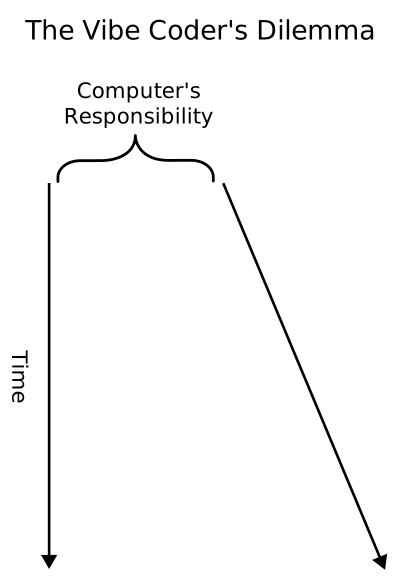
 The diagram above is called the Day 50 Problem. It shows the drift in the utility of vibe coding as time progresses on the scale of days to weeks.
On Day 0 of AI coding you get great results. But as time goes on the utility of the AI coding decreases until you eventually fall-back to human.
This is because the responsibility that the model is entrusted with over the project increases with propotion to time past acceptable levels. This is a problem dating back to the 1800s which is at the heart of control theory.
Presuming you aren’t here looking for a twelve week course, let’s simplify things and focus on AI coding agents.
Responsibility Wall
Every developer has a wall of responsibility for every project and if the tool exceeds beyond that wall then they will not use the tool.
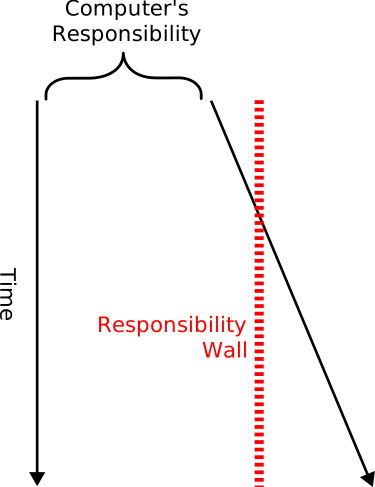
For instance, if there’s a medical device with high legal liability for malfunction that reponsibility wall will be far to the left compared to a hackathon demo.
In classical control theory, this problem is formalized as stability theory.
Code Debt
The area beyond that responsiblity wall becomes code debt: not necessarily because the model has written the code erroneously but because the responsibility wall has been breached and the humans have a level of responsibility.
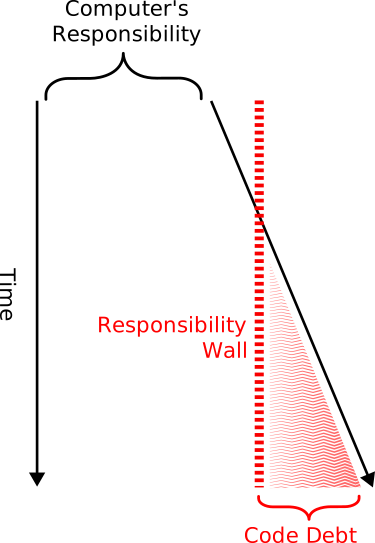
Classically, this is related to unobservable states and residual errors.
In the past few years a number of strategies have been developed to try to address this problem and keep AI coding more productive.
Mitigation Tactics
There’s essentially three ways the lines of these diagrams move around:
PRD/Ralph
The PRD plan made was made famous by Claude Code in 2025 and is becoming the dominant paradigm for AI assisted code development. It can now be found in places like Codex as well.
Its predecessors are the Plan/Act paradigm, essentially swapping around the system prompt and toolcall list, introduced in 2024 by Cline in VS Code (copied by forks such as Roo and Kilo) and earlier, in 2023 by Plandex.
This strategy tries to make that curve start further to the left like this:
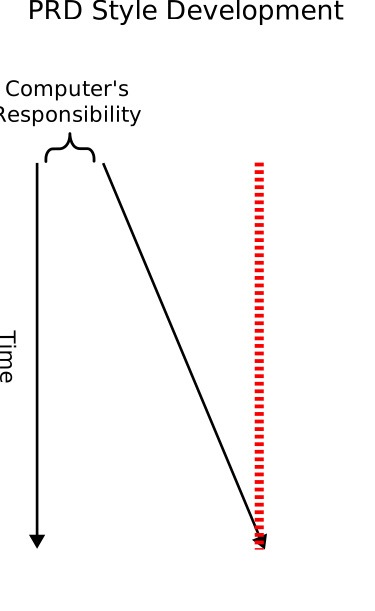
The objective here is that if you chunk what the model is to do in smaller steps and sequentially walk through things than you start with less responsibility assigned to the model and more of it within the contents of the planning document.
In 2025, a paper went out called the Ralph loop, which is essentially a single bash loop as you iterate through the PRD. Recently, models that score roughly above 42 on the ArtificialAnalysis intelligence index can do ralph loops successfully.
Additionally there’s been a lot of work on context management that can increase the efficacy of this strategy.
TDD/Code Reviews
The AI code reviewing and auditing tools such as those by CodeRabbit try to push the wall out a bit further.
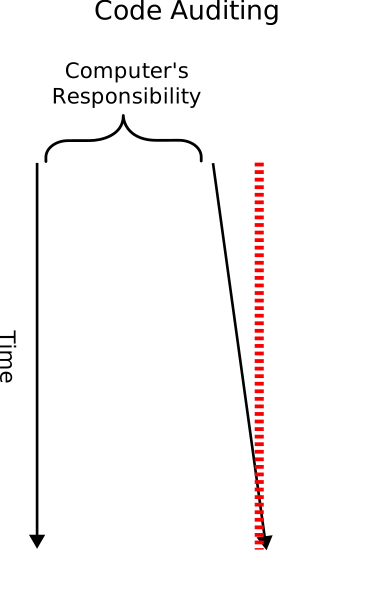
The goal here is to get the model to stop YOLO’ing and reign it in to make it act more responsibly by following institutional rules, restrictions and practices.
This is also the strategy in the many commercial “Close a JIRA ticket” solutions on the market today.
Coworker/Colleague Models
Then there’s the coding as a coworker/colleague technique (done by Claude Cowork, OpenCode in some modes, Aider, and others) that tries to change how the line is bent.
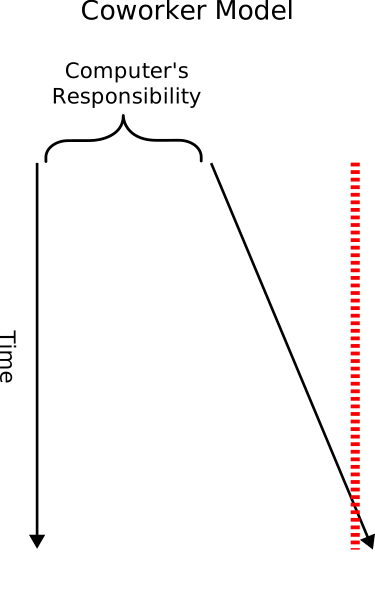
This strategy is to keep you in the loop and abrest of changes and decisions so that you feel comfortable extending the wall.
Keeping Things Aligned
The real desire is this diagram, with the straight lines
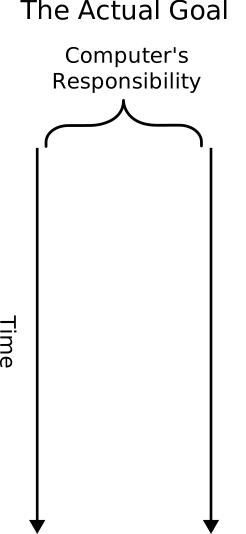
This is the goal of DA`/50: dev tools as an accelerant without compromises or hesitation through the lifecycle of development.
The key to success is maintain vibe drift.